Desertification Research Centre (CIDE) in Valencia
scroll
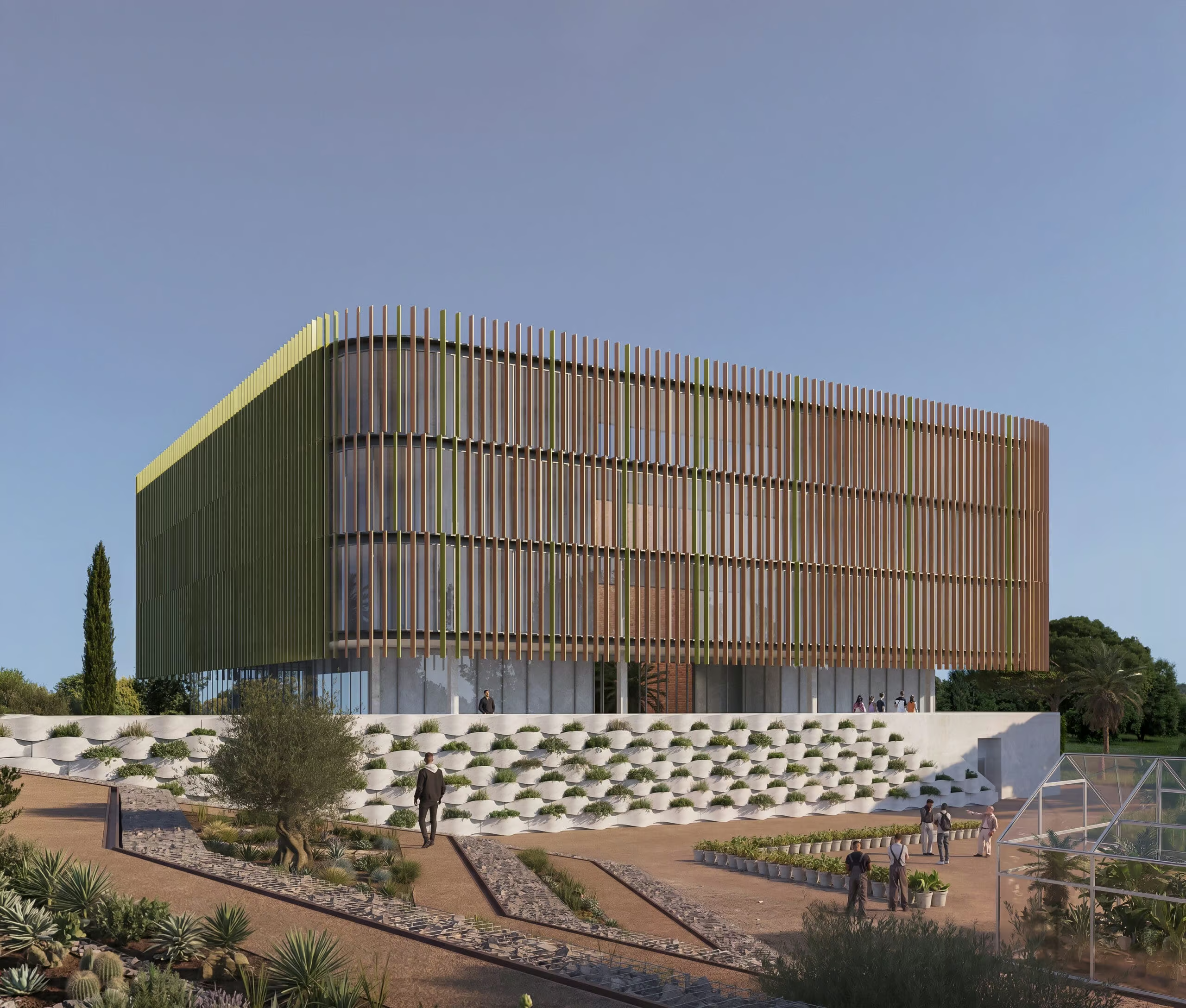
Desertification Research Center CIDE in Valencia
CIDE – A Building Between Territorial Roots and Innovation
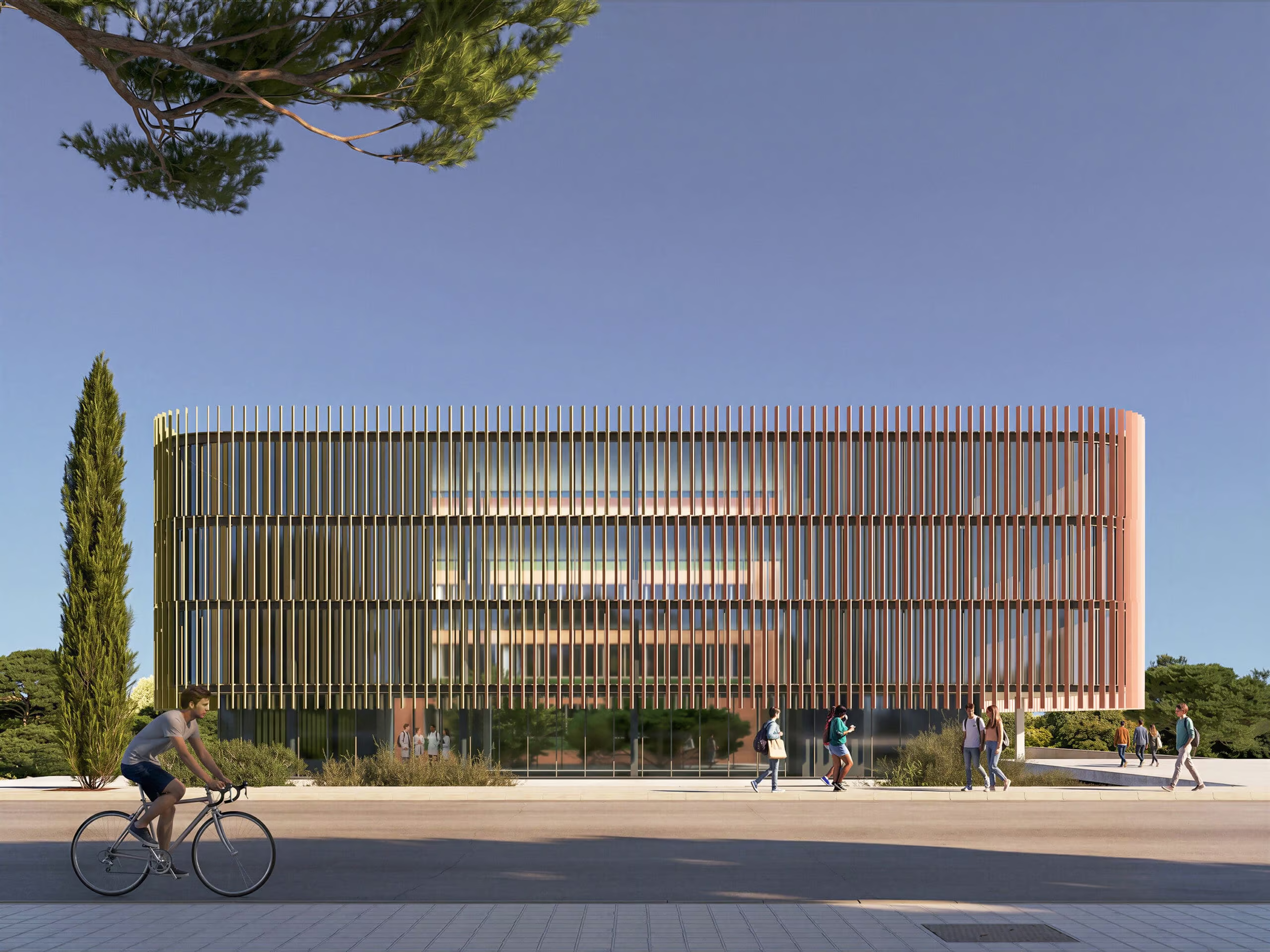
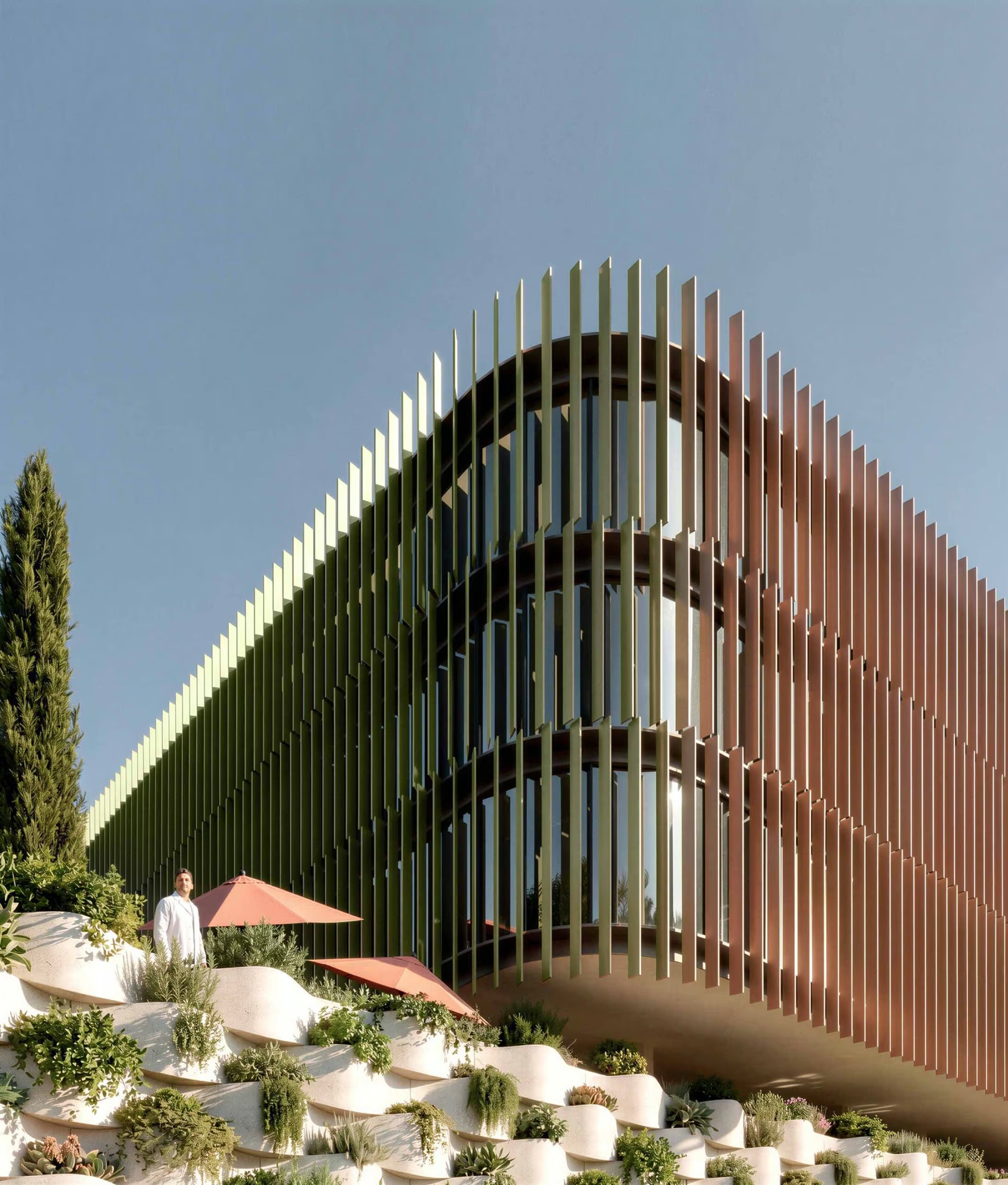
The new CIDE project asserts a unique architectural identity within the campus. A landscaped base anchors the building in its environment, while a compact, refined volume appears to rise above a largely glazed ground floor, giving the whole an impression of lightness.
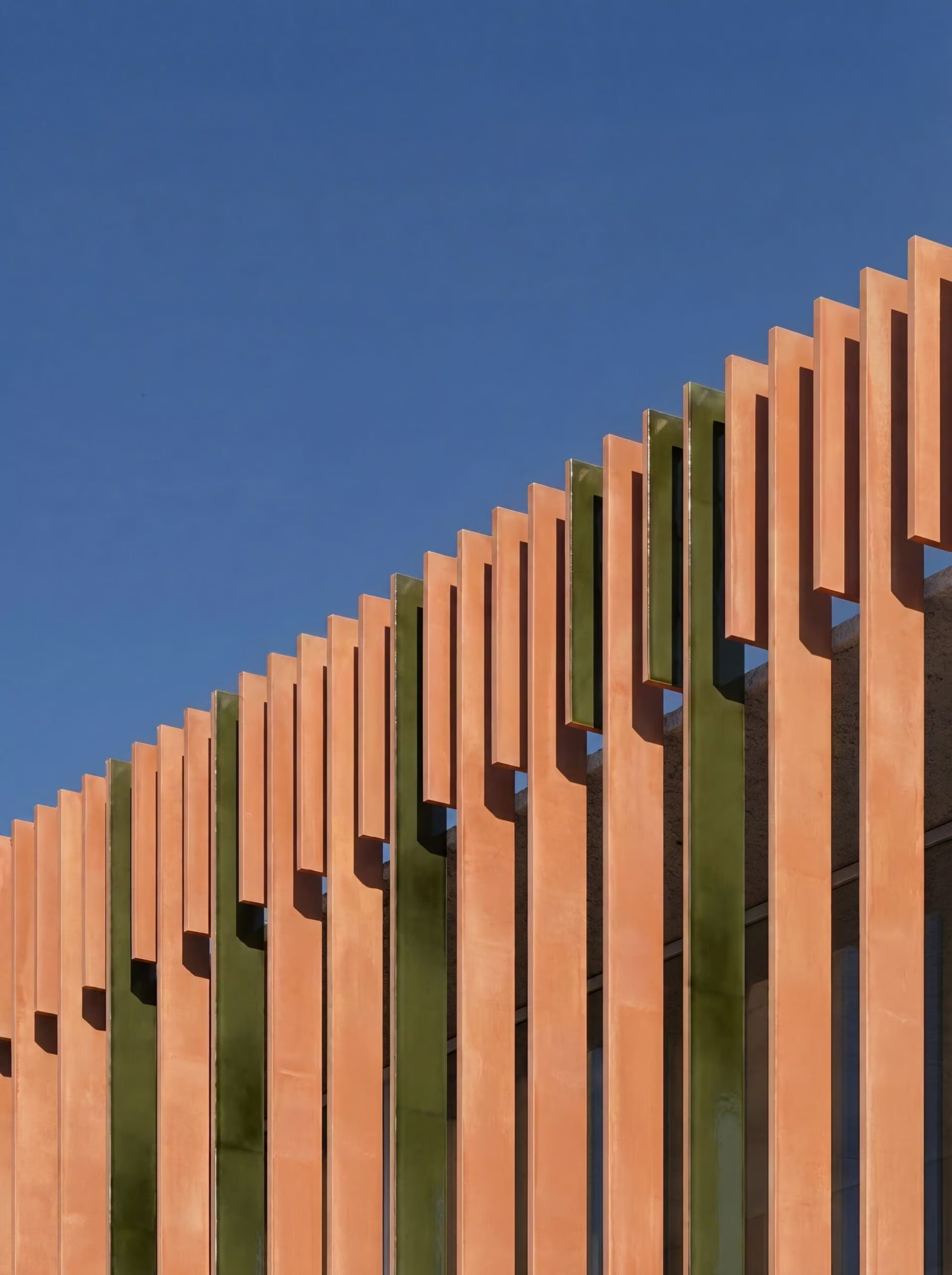
The architecture is expressed through a continuous ceramic envelope, whose nuances evoke the soils and craftsmanship of the Valencian region. Inspired by the tradition of terracotta, this materiality echoes the evolution of the territory, between artisanal heritage, industry, and technological innovation. The natural shades of clay gradually blend with green hues, creating a vibrant facade whose perception changes with movement.
-
Project ownerCSIC (Spanish National Research Council), with the University of Valencia (UV) and the Generalitat Valenciana (GVA)
-
LocationPATERNA (VALENCIA), Spain
-
Date2026
-
Surface6,220 m2
-
CategoryFacility
-
MissionCompetition
-
ProgramConstruction of the new CIDE research center, including laboratories, greenhouses, and outdoor facilities on the Paterna campus.
-
PartnersINTECSA
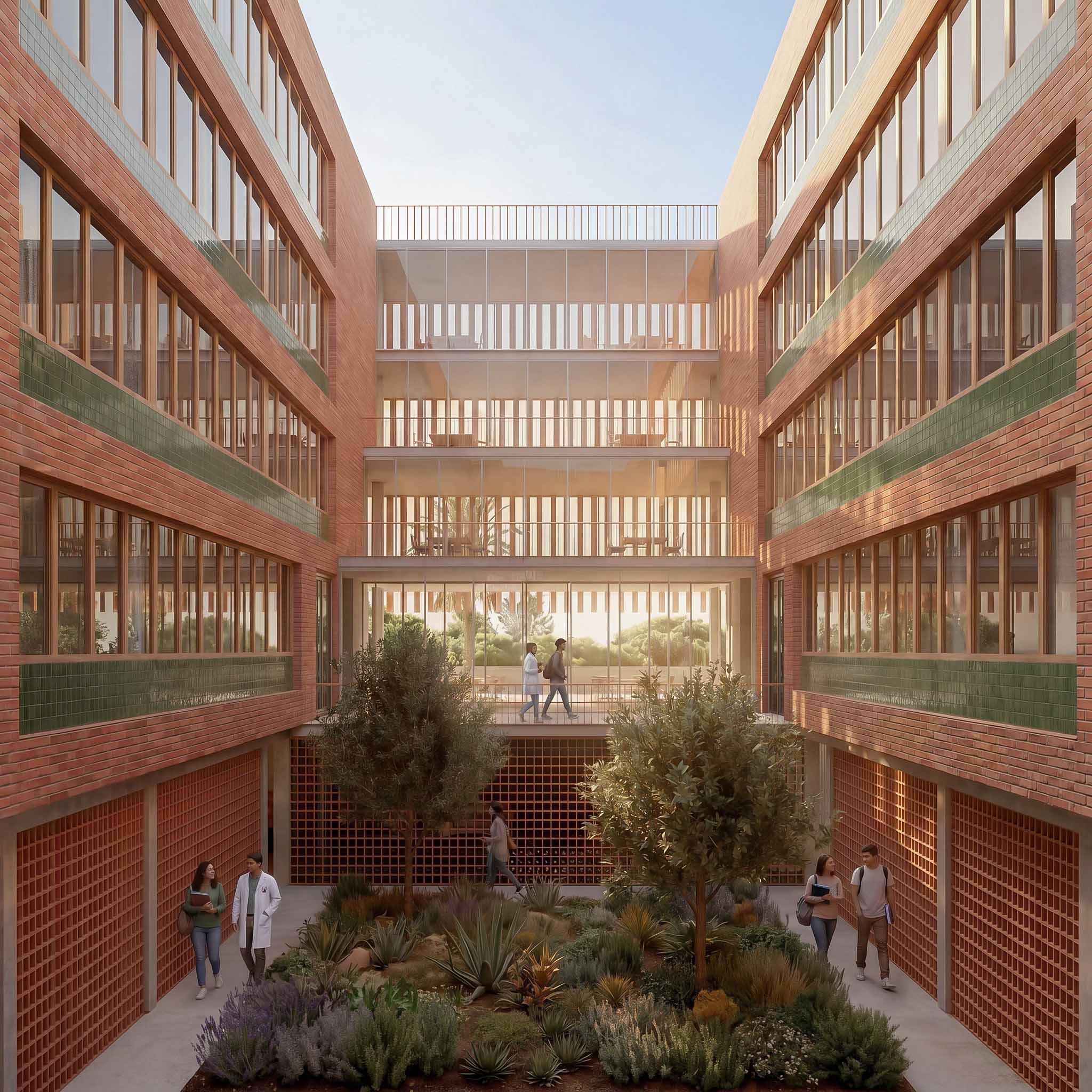
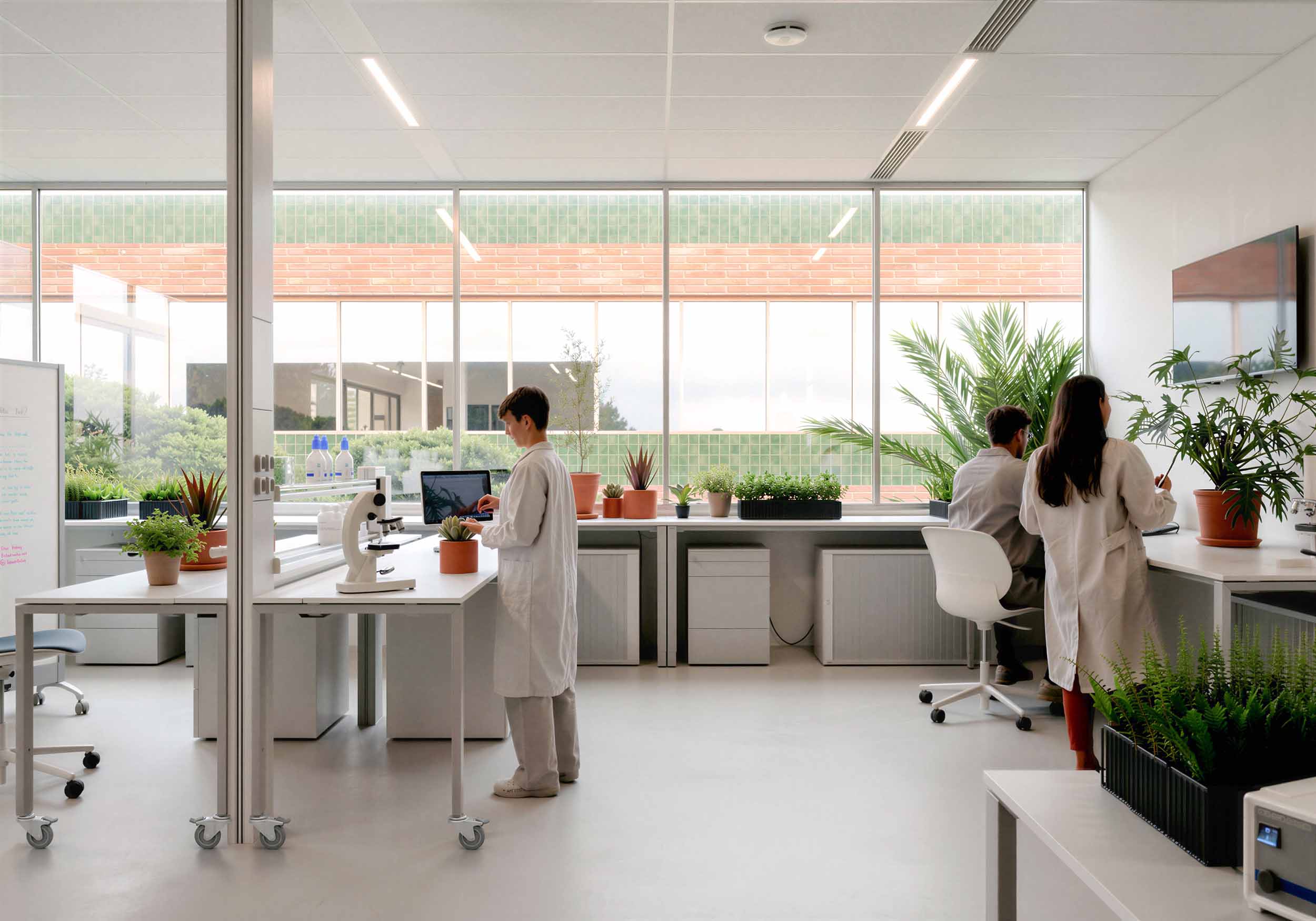
At the heart of the building, a spacious landscaped patio structures the spaces and serves as a meeting point for the scientific community. It promotes natural light, contributes to thermal comfort in the Mediterranean climate, and offers a peaceful setting conducive to exchange. Around this central space, laboratories and workspaces are organized according to a clear and flexible framework, capable of adapting to evolving research practices and needs.
On the ground floor, transparency and openness to the exterior foster connections between the building and the campus. Publicly accessible areas, terraces, and pathways naturally extend activities towards the vegetable gardens and outdoor research spaces. CIDE thus asserts itself as an open venue, where scientific research is fully integrated into campus life and maintains a dialogue with society.